
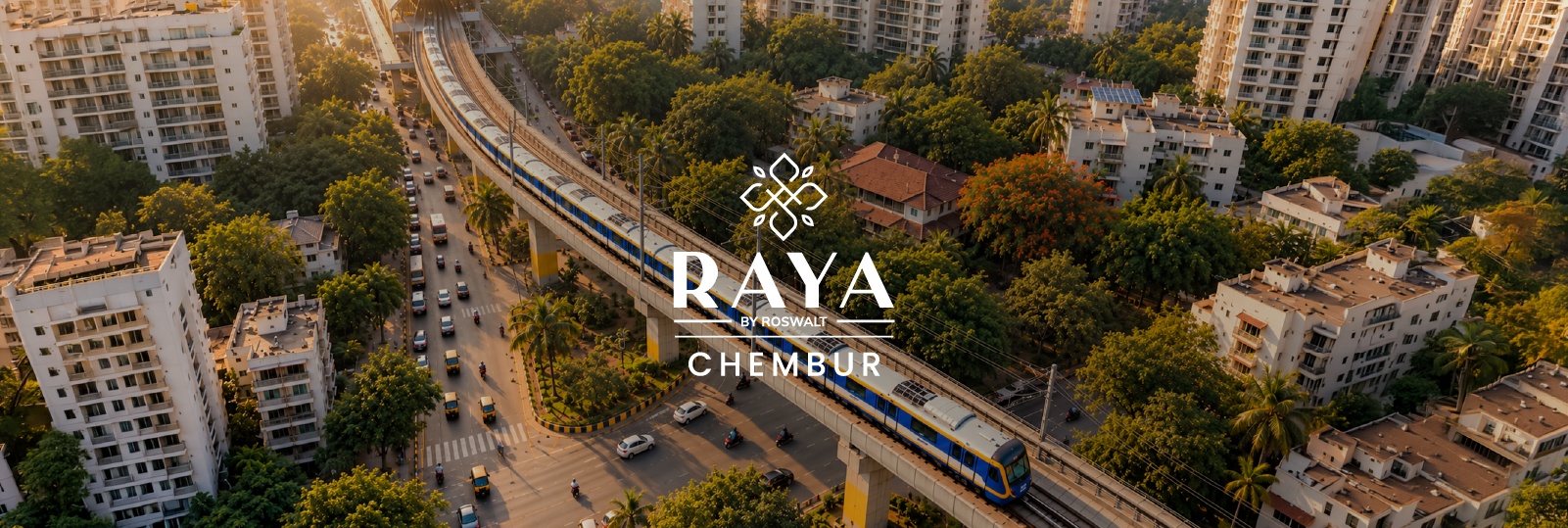
Over the past decade, Mumbai’s real estate narrative has been largely dictated by dynamic connectivity upgrades. Among the various pockets across the Mumbai Metropolitan Region (MMR), few neighborhoods have experienced as profound a structural evolution as Chembur.
Once viewed predominantly as a quiet, leafy suburban enclave or a transit pass-through, Chembur has rapidly transitioned into one of Mumbai’s most strategically positioned micro-markets. At the center of this transformation is a continuous influx of megaprojects-most notably the Atal Setu and an expanding network of Metro corridors.
1. The Strategic Pivot: MTHL & Unrivaled Tri-City Connectivity
The inauguration of the 21.8-kilometer Atal Setu (MTHL) marked a historic shift in MMR’s mobility patterns. Chembur sits right at the northern threshold of this sea bridge via the Eastern Freeway, making it the primary gateway connecting South Mumbai, Central Mumbai, and Navi Mumbai.
- Seamless Commutes: Travel time to South Mumbai via the Eastern Freeway remains capped at 20-25 minutes, while access to the Navi Mumbai International Airport (NMIA) and industrial nodes like Ulwe and Dronagiri is now significantly shortened via MTHL.
- The SCLR Advantage: Coupled with the Santa Cruz–Chembur Link Road (SCLR), residents can reach Bandra-Kurla Complex (BKC)-Mumbai’s premier financial hub-in roughly 15 to 20 minutes, bypassing historical congestion bottlenecks.
This unique geographic advantage positions Chembur as a rare “15-to-30-minute node” connecting every key economic hub in the city.
2. Metro Lines: Redefining Intra-City Transit
While mega-bridges handle long-distance road transit, Mumbai’s expanding Metro network is revolutionizing day-to-day public transit within the suburb:
- Metro Line 2B (D.N. Nagar to Mandale): Piercing through Chembur, Line 2B provides direct rapid-transit connectivity to BKC, Bandra, and the Western Suburbs, bypassing road traffic entirely.
- Metro Line 4 (Wadala to Kasarvadavali): Linking Chembur to Thane and South Mumbai, Line 4 creates a north-south corridor that simplifies daily commutes for thousands of professionals.
- Monorail Integration: Serving localized mobility from Jacob Circle through Wadala to Chembur, adding another layer of transit choices.
The convergence of multi-modal transport options-highways, sea links, and metro rails-has made residential projects in chembur among the most resilient investments in Central Mumbai.
3. Real Estate Impact: The Rise of Premium Living and Value Appreciation
As infrastructure improves, buyer demographics invariably evolve. Chembur is witnessing a notable shift in demand patterns:
Capital Appreciation & Rental Yields
Historically driven by local upgrade demand, Chembur now attracts working professionals from BKC, Lower Parel, Nariman Point, and Navi Mumbai. The convenience factor has driven steady capital appreciation alongside healthy rental yields, making it a hotspot for both end-users and seasoned investors.
The Evolution of Residential Formats
Old, low-density housing societies are giving way to high-rise vertical developments. Modern buyers are no longer seeking just square footage-they demand biophilic designs, rooftop amenity decks, smart home automation, and dedicated wellness infrastructure built into their living spaces.
4. Why Chembur Continues to Lead
Unlike newly developed peripheries, Chembur combines modern infrastructural access with deep-rooted social infrastructure:
- Educational Excellence: Home to premier institutions like TISS and well-established schools.
- Lifestyle & Recreation: Iconic hubs such as The Bombay Presidency Golf Club, established cultural clubs, and a thriving dining scene.
- Green Cover: Substantial green pockets that provide a welcome relief from the urban density of traditional business centers.
Looking Ahead: A Refined Skyline
For homebuyers seeking a balanced lifestyle-where convenient access to Mumbai’s key business districts meets peaceful, nature-inspired living-Chembur continues to emerge as a promising residential destination. Its evolving infrastructure, established social amenities, and growing range of modern residential developments are shaping the suburb’s next chapter in Mumbai’s real estate landscape.

