
Blogs

Lorem ipsum dolor sit amet, consectetur adipiscing elit. Discover insights, inspiration, and perspectives on luxury living, real estate, architecture, and modern lifestyles.

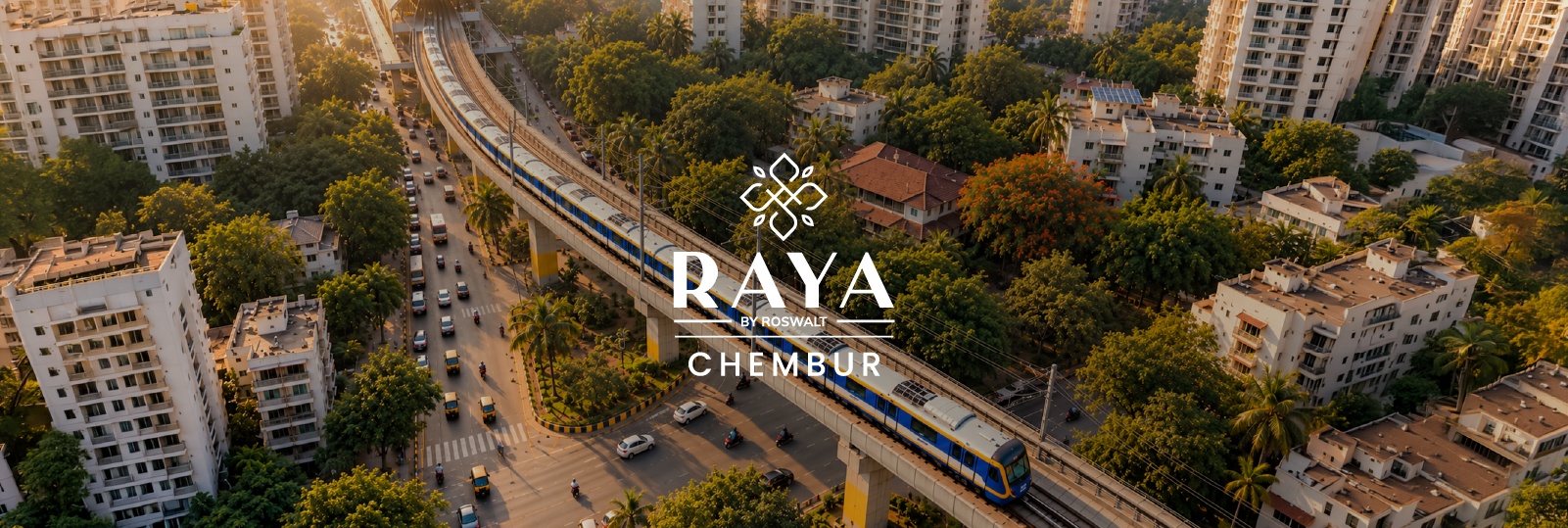
Ask any experienced property investor in Mumbai to name the city’s most strategically connected suburb, and Chembur consistently tops the list. Once perceived as a sleepy, industrial-adjacent green pocket, Chembur has undergone a rapid, high-stakes urban metamorphosis over the past decade. Today, it stands as the central transit crossroad linking South Mumbai, the commercial powerhouse of Bandra-Kurla Complex (BKC), the northern growth corridors, and Navi Mumbai.

For corporate professionals and seasoned investors evaluating Property in Chembur Mumbai, daily commute efficiency is no longer a peripheral perk—it is the single deciding factor determining long-term livability, work-life balance, and sustained property appreciation. While crossing Mumbai’s arterial stretches can easily consume two to three hours daily, Chembur’s multi-directional transit matrix rewrites the rules of urban mobility.

The BKC Link: Cutting the Corporate Transit Deficit

The primary demand driver for Chembur’s residential surge is its unmatched access to the Bandra-Kurla Complex. As Mumbai’s premier central business district, BKC houses multinational financial institutions, foreign consulates, major corporate headquarters, and high-end commercial hubs.

Historically, professionals working in BKC faced grueling commutes from South Mumbai via the Sea Link or down from the congested Western Express Highway. Via the Santacruz-Chembur Link Road (SCLR) and its elevated connector networks, residents looking for homes near bkc Chembur can now cut their morning commute down to 15 to 20 minutes.

This access reclaims hundreds of hours per year previously lost to bumper-to-bumper peak-hour gridlock. For C-suite executives, investment bankers, and consultants, this proximity makes Chembur a logical, time-efficient alternative to the exorbitant per-square-foot valuations of Bandra or Kurla West.

A Multi-Directional Transit Grid: South Mumbai to Navi Mumbai

Chembur’s true geographic advantage lies in its ability to offer frictionless transit across all four cardinal directions:

  • Signal-Free Access to South Mumbai: The Eastern Freeway transformed Chembur into a de facto extension of Mumbai’s historic core. Commuters can drive from Chembur straight into the business and legal quarters of Fort, Ballard Estate, Nariman Point, and Colaba in roughly 20 to 25 minutes, entirely bypassing the bottlenecked local roads of Kurla, Sion, and Dadar.
  • Northern and Central Artery: Proximity to the Eastern Express Highway (EEH) provides unobstructed vehicular flow heading north toward Ghatkopar, Vikhroli, Powai, and Thane. Having flats near Eastern Express Highway ensures fast regional reach without getting trapped in local micro-traffic bottlenecks.
  • The Trans-Harbour Advantage: The operationalization of the Atal Bihari Vajpayee Sewri–Nhava Sheva Atal Setu (MTHL) dramatically shortens the journey from the Eastern suburbs into Navi Mumbai and the upcoming Navi Mumbai International Airport (NMIA). Chembur sits directly within the capture zone of these southern expressway feeder routes.

Multi-Modal Mass Transit: Rail, Monorail, and Metro 2B

A world-class residential node cannot rely on road infrastructure alone. From a comprehensive urban planning viewpoint, Chembur benefits from one of the densest multi-modal mass-transit integrations in the Mumbai Metropolitan Region (MMR):

  1. Suburban Rail Network: Established rail connections anchored by realty projects near Chembur railway station and nearby Kurla Junction provide immediate access to both the Harbour Line and the Central Line, keeping residents plugged into Mumbai’s foundational commuter lifeline.
  2. The Monorail Line: Chembur serves as the eastern terminus for Line 1 of the Mumbai Monorail, delivering direct, unhindered connectivity across Wadala, Lower Parel, and Jacob Circle.
  3. Metro Line 2B (D.N. Nagar to Mandale): This high-capacity, elevated metro corridor spans key central junctions across Chembur, providing direct east-west rail transit into Kurla, Bandra, and the western suburban belt without sharing road lanes with ground traffic.

Having three distinct mass transit tiers ensures that residents, household staff, and visiting guests always have rapid, weather-proof transportation alternatives at hand.

Investment Fundamentals: Rental Yields and Capital Resiliency

Transit convergence is the most dependable indicator of real estate capital growth. This multi-layered infrastructure framework has cemented property investment chembur as one of the most defensive, high-upside avenues in Mumbai real estate.

  • Corporate Tenant Demand: With BKC, Lower Parel, and Fort within a 20-minute radius, Chembur attracts a high concentration of salaried corporate tenants. High-spec Apartments in Chembur East and central neighborhoods command premium rental rates, low vacancy cycles, and reliable annual escalations.
  • Scarcity Value: Unlike sprawling outer peripheries where endless land creates an oversupply risk, Chembur’s central geography has finite land parcels. As aging cooperative housing societies and older bungalows undergo redevelopment, new master-planned inventory remains strictly limited, creating natural upward pressure on capital values over 5-to-10-year holding horizons.

Micro-Location Precision: RAYA by Roswalt Realty

While regional connectivity makes Chembur desirable, selecting the right micro-location is critical. A home located directly against an elevated ramp or heavy freight corridor exposes residents to continuous acoustic disturbance, particulate matter, and ground vibration.

This is where RAYA by Roswalt Realty distinguishes itself from competing chembur residential projects. Positioned in an optimal, green-fringed pocket of Central Chembur, RAYA achieves a delicate balance:

  • Instant Arterial Access: Residents can exit directly onto feeder links for the SCLR, Eastern Freeway, and EEH within minutes, avoiding tedious inner-lane navigation.
  • Acoustic and Environmental Buffer: Set within an insulated residential enclave, the development is physically shielded from highway noise, ambient dust, and arterial exhaust.
  • Integrated Sanctuary Living: Instead of a standalone high-rise perched on an open road, RAYA is master-planned as a nature-inspired sanctuary. It pairs panoramic green views and dedicated wellness zones with the urban convenience of a premier central location.

For discerning buyers surveying Flats in Chembur, RAYA delivers an uncompromising lifestyle proposition: immediate connectivity to Mumbai’s primary business districts, grounded by the peace and permanence of an exclusive private retreat.

As family dynamics, professional routines, and multi-generational living arrangements evolve in Mumbai, spatial requirements have undergone a dramatic structural shift. For years, the standard two-bedroom home served as the default benchmark for urban households. However, as families expand, children transition into adolescence requiring dedicated study zones, and aging parents move in, the typical 2 BHK quickly reveals severe spatial friction.

This growing need for personal autonomy within a shared domestic environment has catalyzed a massive surge in demand for Luxury 3 BHK flats in Chembur. Yet, upgrading to a three-bedroom configuration involves far more than simply adding an extra wall and a doorway; it requires intelligent spatial engineering, acoustic privacy, and seamless community infrastructure tailored to modern life.

The Usability Deficit: Why Traditional Layouts Fall Short

When evaluating real estate in established micro-markets, buyers often encounter a glaring disparity between headline measurements and real-world utility. A significant portion of older 3 BHK flats in Chembur East suffer from obsolete architectural design practices:

  • The Corridor Tax: Deep, winding internal hallways designed simply to connect disparate rooms frequently consume 10% to 15% of the apartment’s declared carpet area. These transitional dead zones cannot accommodate furniture, storage, or daily activities, effectively penalizing the buyer per square foot.
  • Structural Intrusions: Traditional column-and-beam brick masonry inevitably produces protruding pillars, recessed alcoves, and irregular wall planes that complicate modular interior work, wardrobe installations, and standard furniture placement.
  • Compromised Daylighting and Cross-Ventilation: Legacy building footprints frequently rely on narrow light-wells and internal air shafts, leaving central living and dining areas reliant on artificial illumination during daytime hours.

When assessing a 3 BHK flat with carpet area in Chembur, discerning homebuyers must look beyond raw RERA carpet figures and critically audit the net usable floor plate-the actual unimpeded square footage available for active living.

Architectural Modernization: Engineering Usable Space

To overcome these structural limitations, forward-thinking developments utilize monolithic aluminum formwork (MIVAN) shear-wall construction.

In traditional brick and column layouts, 10% to 15% of the total area is commonly lost to transit corridors, protruding pillars disrupt wall planes, and awkward recesses hinder modular furniture. By contrast, modern monolithic shear-wall design enables near-zero dead passage planning, creates flush right-angle walls, delivers maximum edge-to-edge utility, and provides superior acoustic isolation between rooms.

Eliminating internal masonry bulk allows for clean, rectangular proportions that maximize everyday functional space. Within this optimized framework, a dedicated third bedroom offers crucial long-term adaptability:

  1. The Executive Telecommuting Hub: An acoustically isolated study complete with ergonomic workstations, dedicated storage, and uninterrupted background privacy for global video calls.
  2. The Senior-Friendly Sanctuary: A master suite planned with level transitions, wide door clearances, and barrier-free en-suite layouts designed specifically for elderly mobility and safety.
  3. The Multi-Child Functional Suite: A versatile layout capable of accommodating twin study desks, floor-to-ceiling wardrobe modules, and dedicated recreational areas without cluttering the central living room.

Subterranean and Podium Logistics: The Parking Imperative

In the dense fabric of Mumbai’s eastern suburbs, vehicular movement and storage represent a daily logistical friction point. Locating a genuine 3 BHK apartment with parking Chembur that avoids the daily chaos of puzzle stackers, mechanical lift failures, or narrow basement ramps is increasingly rare.

High-caliber contemporary developments resolve these challenges through dedicated vehicular engineering:

  • Geometry-First Ingress and Egress: Wide two-way circulation ramps featuring generous turning radiuses specifically engineered to handle modern full-size SUVs without wheel rim scraping or blind-corner risks.
  • Vertical Clearances and Infrastructure: High structural ceiling clearances designed to accommodate modern utility vehicles effortlessly, integrated with pre-planned electrical conduits for private EV charging infrastructure.
  • Pedestrian-Vehicular Segregation: Comprehensive podium-level planning that completely divorces internal pedestrian walkways, drop-off lobbies, and jogging loops from vehicular driveways, eliminating ground-level traffic conflicts entirely.

Outdoor Sanctuaries: The Gated Community Advantage

Beyond the threshold of the individual home, lifestyle standards are heavily shaped by community infrastructure. Selecting Gated community 3 BHK apartments Chembur offers families an insulated urban oasis where recreation does not compete with city thoroughfares.

A well-planned community integrates three distinct lifestyle layers:

  • Dedicated Security Tier: Multi-point access control, automated boom barriers, and 24/7 peripheral CCTV surveillance that monitor access without intruding on daily life.
  • Active Recreation Zones: Vehicle-free open-air lawns, dedicated toddler turf, interactive play parks, and outdoor sports courts where children can play safely.
  • Wellness and Social Infrastructure: Semi-covered lap pools, multi-purpose clubhouse fitness centers, yoga decks, and quiet landscaped seating alcoves tailored for senior citizens.

This controlled environment ensures that children can ride bicycles and explore landscaped open spaces with total autonomy, while senior family members enjoy peaceful, traffic-free walking trails.

Strategic Micro-Location: Chembur’s Connectivity Matrix

Chembur’s enduring real estate demand stems from its unmatched geographic positioning at the nexus of Mumbai’s major transit corridors:

  • The Eastern Freeway: Offers a direct, signal-free 20-minute commute to the commercial hubs of South Mumbai, including Fort, Colaba, and Nariman Point.
  • The Santacruz-Chembur Link Road (SCLR) & BKC Connector: Connects residents directly to the financial epicentre of Bandra-Kurla Complex (BKC) and the Western Express Highway in 15 to 25 minutes.
  • Eastern Express Highway & Metro Corridors: Grants seamless radial access toward Powai, Thane, and the emerging Navi Mumbai international business clusters.

Choosing a home close to green landmark centers-such as a 3 BHK flat near Diamond Garden Chembur-combines this rapid arterial access with an established social fabric comprising premier educational institutions, multi-specialty hospitals, traditional retail streets, and legacy social clubs like The Chembur Gymkhana and Bombay Presidency Golf Club.

Benchmark Living: RAYA by Roswalt Realty

For families seeking an uncompromising standard of design, construction speed, and layout efficiency, RAYA by Roswalt Realty stands out as a prime destination. Developed to address the exact spatial bottlenecks seen in older residential blocks, RAYA delivers:

  • Intelligent Zero-Passage Architecture: Floor layouts engineered to eliminate unusable dead corridors, channeling every square foot of your RERA approved 3 BHK flat Chembur into active, usable living, dining, and sleeping areas.
  • Expansive Private Sun Decks: Well-proportioned outdoor balconies extending off the primary living spaces, maximizing natural cross-ventilation, day-long daylight, and sweeping skyline vistas.
  • Engineered Multi-Tier Vehicular Movement: Dedicated, structured parking layouts featuring generous ramp geometry and safe pedestrian pathways.
  • Comprehensive Multi-Generational Amenities: Landscaped outdoor leisure decks, fully equipped fitness suites, safe children’s play areas, and quiet wellness corners designed to serve every age group under one roof.

For buyers evaluating Under construction 3 BHK flats Chembur that successfully merge everyday practical utility, premium architectural detailing, and long-term capital appreciation, RAYA provides an enduring family sanctuary in the vibrant core of Mumbai.

When you look at a floor plan in Chembur, the brochure might read 800 sq. ft. or 1,200 sq. ft. carpet area. But the moment you walk into the sample flat, something feels off. The living room feels tight, the entry passage eats up 15% of your floor space, and you are left wondering: Where did all my usable carpet area actually go?

As a homebuyer in Mumbai, you pay top-tier pricing for every single square foot. Why do some layouts feel expansive while others feel cramped despite having identical RERA carpet numbers?

The Engineering Behind Efficient Carpet Area

To understand spatial efficiency, you have to look at home design through a developer’s structural and architectural lens. A high carpet area figure on paper does not automatically guarantee a functional, breathable living space.

1. The Hidden Culprit: Column Placements & Dead Passages

Excessive corridors and awkwardly positioned structural columns frequently steal valuable square footage. When an entry hallway takes up 60 to 80 sq. ft. just to connect the front door to the living room, that is dead space you purchase but can neither furnish nor truly live in.

2. Living-Dining Proportions & Wall Alignments

A long, narrow rectangular room might match a square living room in overall square footage, but it severely restricts layout flexibility and foot traffic. Superior layout engineering balance focuses on wide, well-proportioned living zones that maximize usable floor space, visual depth, and cross-ventilation.

3-Step Checklist: How to Spot Wasted Space Before You Buy

Before locking in your home loan or signing an agreement, evaluate any layout using these structural criteria:

Calculate the Passage Ratio: Measure internal hallway square footage. If corridors consume more than 8% to 10% of total carpet area, you are losing valuable living space.

Inspect Bedroom Column Offsets: Ensure structural columns do not protrude into corners, as these offsets prevent standard wardrobes and headboards from sitting flush against walls.

Evaluate the Window-to-Wall Aspect Ratio: Broader window apertures and full-height glass panels create visual expansion, making rooms feel noticeably larger than their measured dimensions.

Spatial Efficiency in Practice: Living at RAYA

For families seeking a genuine upgrade in Central Mumbai, choosing Spacious 3 BHK apartments in Chembur built with zero-waste design principles makes a massive difference in daily comfort. Modern developments like RAYA by Roswalt showcase how thoughtful engineering eliminates dark, narrow passages and structural protrusions to prioritize seamless room transitions and maximized carpet utility:

Zero-Waste Foyer Transitions: Floor plans configured to enter directly into grand living zones, eliminating redundant corridors.

Optimized Room Geometry: Square and broad-rectangular layouts that effortlessly accommodate full-sized wardrobes, home office desks, and king-size beds.

Expansive Deck Extensions: Integrated balcony layouts that blend indoors with outdoors, dramatically enhancing room volume and natural lighting.

When evaluating Spacious 3 BHK apartments in Chembur, looking for layouts that balance biophilic design with structural efficiency ensures every square foot translates into true everyday living value.

Over the past decade, Mumbai’s real estate narrative has been largely dictated by dynamic connectivity upgrades. Among the various pockets across the Mumbai Metropolitan Region (MMR), few neighborhoods have experienced as profound a structural evolution as Chembur.

Once viewed predominantly as a quiet, leafy suburban enclave or a transit pass-through, Chembur has rapidly transitioned into one of Mumbai’s most strategically positioned micro-markets. At the center of this transformation is a continuous influx of megaprojects-most notably the Atal Setu and an expanding network of Metro corridors.

1. The Strategic Pivot: MTHL & Unrivaled Tri-City Connectivity

The inauguration of the 21.8-kilometer Atal Setu (MTHL) marked a historic shift in MMR’s mobility patterns. Chembur sits right at the northern threshold of this sea bridge via the Eastern Freeway, making it the primary gateway connecting South Mumbai, Central Mumbai, and Navi Mumbai.

  • Seamless Commutes: Travel time to South Mumbai via the Eastern Freeway remains capped at 20-25 minutes, while access to the Navi Mumbai International Airport (NMIA) and industrial nodes like Ulwe and Dronagiri is now significantly shortened via MTHL.
  • The SCLR Advantage: Coupled with the Santa Cruz–Chembur Link Road (SCLR), residents can reach Bandra-Kurla Complex (BKC)-Mumbai’s premier financial hub-in roughly 15 to 20 minutes, bypassing historical congestion bottlenecks.

This unique geographic advantage positions Chembur as a rare “15-to-30-minute node” connecting every key economic hub in the city.

2. Metro Lines: Redefining Intra-City Transit

While mega-bridges handle long-distance road transit, Mumbai’s expanding Metro network is revolutionizing day-to-day public transit within the suburb:

  • Metro Line 2B (D.N. Nagar to Mandale): Piercing through Chembur, Line 2B provides direct rapid-transit connectivity to BKC, Bandra, and the Western Suburbs, bypassing road traffic entirely.
  • Metro Line 4 (Wadala to Kasarvadavali): Linking Chembur to Thane and South Mumbai, Line 4 creates a north-south corridor that simplifies daily commutes for thousands of professionals.
  • Monorail Integration: Serving localized mobility from Jacob Circle through Wadala to Chembur, adding another layer of transit choices.

The convergence of multi-modal transport options-highways, sea links, and metro rails-has made residential projects in chembur among the most resilient investments in Central Mumbai.

3. Real Estate Impact: The Rise of Premium Living and Value Appreciation

As infrastructure improves, buyer demographics invariably evolve. Chembur is witnessing a notable shift in demand patterns:

Capital Appreciation & Rental Yields
Historically driven by local upgrade demand, Chembur now attracts working professionals from BKC, Lower Parel, Nariman Point, and Navi Mumbai. The convenience factor has driven steady capital appreciation alongside healthy rental yields, making it a hotspot for both end-users and seasoned investors.

The Evolution of Residential Formats
Old, low-density housing societies are giving way to high-rise vertical developments. Modern buyers are no longer seeking just square footage-they demand biophilic designs, rooftop amenity decks, smart home automation, and dedicated wellness infrastructure built into their living spaces.

4. Why Chembur Continues to Lead

Unlike newly developed peripheries, Chembur combines modern infrastructural access with deep-rooted social infrastructure:

  • Educational Excellence: Home to premier institutions like TISS and well-established schools.
  • Lifestyle & Recreation: Iconic hubs such as The Bombay Presidency Golf Club, established cultural clubs, and a thriving dining scene.
  • Green Cover: Substantial green pockets that provide a welcome relief from the urban density of traditional business centers.

Looking Ahead: A Refined Skyline

For homebuyers seeking a balanced lifestyle-where convenient access to Mumbai’s key business districts meets peaceful, nature-inspired living-Chembur continues to emerge as a promising residential destination. Its evolving infrastructure, established social amenities, and growing range of modern residential developments are shaping the suburb’s next chapter in Mumbai’s real estate landscape.

Scroll to Top